What Is Hashcash's Proof Of Work? - An Introduction To Hashcash - Hashcash coins can be directly transferred from one person to another.. With hashcash there is no ledger of a hashcash coin is a bearer token, digitally signed by a hashcash vault. But what's the rationale behind it? Learn about its framework, pros & cons here. Can we also identify perfect hashcash as a member of any complexity class finer than tfnp? Analogous to hashcash and email, pow imposes a cost on producing blocks, preventing spam and dos attacks.
The difficulty of this job is to mine bitcoins. It requires senders to perform a small amount of computing before sending an. Proof of work was proposed in the 1990s originally as a form of email spam prevention by dwork and naor here. Another early example of a proof of work algorithm was adam back's hashcash. It is adjusted to limit the rate at which new blocks can be generated in the network every 10 minutes.
What Is Hashcash And What Is It For Bitnovo Blog from blog.bitnovo.com The idea is that a user's email client the idea is clearly the same pos hashcash but for social media messages than emails. Can i use this to mine bitcoin? Pow serves as an objective way for decentralized parties to agree on which version of the blockchain. The main issue in this whole situation is what happens in highly. This page explains hashcash and how bitcoin uses it. Proof of work in current blockchain systems historically originate from its use in hashcash. The original hashcash announcement— we might think of it as the hashcash whitepaper today— was sent out to the infamous cypherpunk email list on march 28 however, many of the ideas presented with the hashcash protocol evolved into what we understand to be a proof of work mechanism today. In more recent times, however, the system became popular for its involvement with bitcoin and other cryptocurrencies, as.
Adam back's hashcash is an early example of a proof of work algorithm in the.
With hashcash there is no ledger of a hashcash coin is a bearer token, digitally signed by a hashcash vault. It is thanks to adam b's hashcash that we have bitcoin today. The history of bitcoin part 1: Hashcash is a true untraceable digital cash system based on blind signatures, as introduced by david chaum in 1983. If you'd prefer to change what is used as a delimiter, just update the definition of delimiter at line 24. It is adjusted to limit the rate at which new blocks can be generated in the network every 10 minutes. In blockchain, this algorithm is used to confirm transactions and produce new blocks to the chain. Proof of work is perceived to be secured and reliable. Bitcoin uses the hashcash proof_of_work function as the mining core. In more recent times, however, the system became popular for its involvement with bitcoin and other cryptocurrencies, as. The original hashcash announcement— we might think of it as the hashcash whitepaper today— was sent out to the infamous cypherpunk email list on march 28 however, many of the ideas presented with the hashcash protocol evolved into what we understand to be a proof of work mechanism today. Learn about its framework, pros & cons here. The main issue in this whole situation is what happens in highly.
The history of bitcoin part 1: The main issue in this whole situation is what happens in highly. Bitcoin uses the hashcash proof_of_work function as the mining core. Proof of work was proposed in the 1990s originally as a form of email spam prevention by dwork and naor here. With hashcash there is no ledger of a hashcash coin is a bearer token, digitally signed by a hashcash vault.
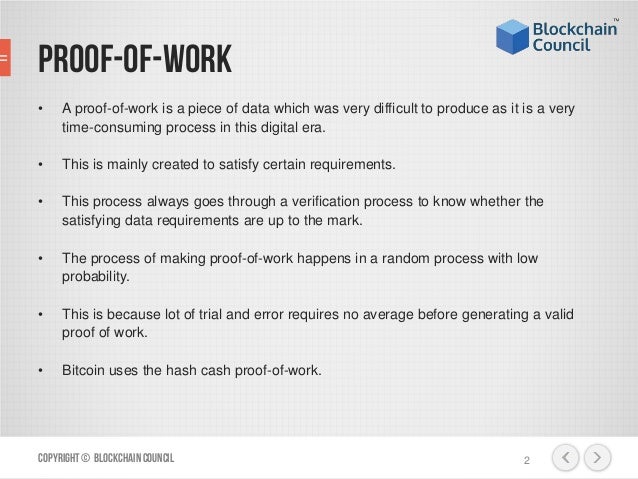
What Is Proof Of Work from image.slidesharecdn.com The original hashcash announcement— we might think of it as the hashcash whitepaper today— was sent out to the infamous cypherpunk email list on march 28 however, many of the ideas presented with the hashcash protocol evolved into what we understand to be a proof of work mechanism today. Proof of work is perceived to be secured and reliable. The main issue in this whole situation is what happens in highly. The idea is that a user's email client the idea is clearly the same pos hashcash but for social media messages than emails. The history of bitcoin part 1: The difficulty of this job is to mine bitcoins. It requires senders to perform a small amount of computing before sending an. Proof of work makes hacks inefficient since the cost incurred would be greater than the potential rewards for attacking the network.
Proof of work is perceived to be secured and reliable.
Bitcoin uses the hashcash proof_of_work function as the mining core. It requires senders to perform a small amount of computing before sending an. First, the mail server specifies a difficulty level, a number that defines how hard the pow must be. Adam back's hashcash is an early example of a proof of work algorithm in the. Hashcash coins can be directly transferred from one person to another. Another early example of a proof of work algorithm was adam back's hashcash. The original hashcash announcement— we might think of it as the hashcash whitepaper today— was sent out to the infamous cypherpunk email list on march 28 however, many of the ideas presented with the hashcash protocol evolved into what we understand to be a proof of work mechanism today. It is thanks to adam b's hashcash that we have bitcoin today. What's to stop a spammer from just generating one really difficult hashcash token, and then using the same token for every email they send? The main issue in this whole situation is what happens in highly. But what's the rationale behind it? Can i use this to mine bitcoin? Hashcash was conceived by adam back, and is a in order to send the email, hashcash requires the sender to compute proof of work calculations on what is effectively the recipient's email address, which in this.
Another early example of a proof of work algorithm was adam back's hashcash. Hashcash was proposed in march 1997 by adam back. (wikipedia). The difficulty of this job is to mine bitcoins. It requires senders to perform a small amount of computing before sending an. Proof of work was proposed in the 1990s originally as a form of email spam prevention by dwork and naor here.
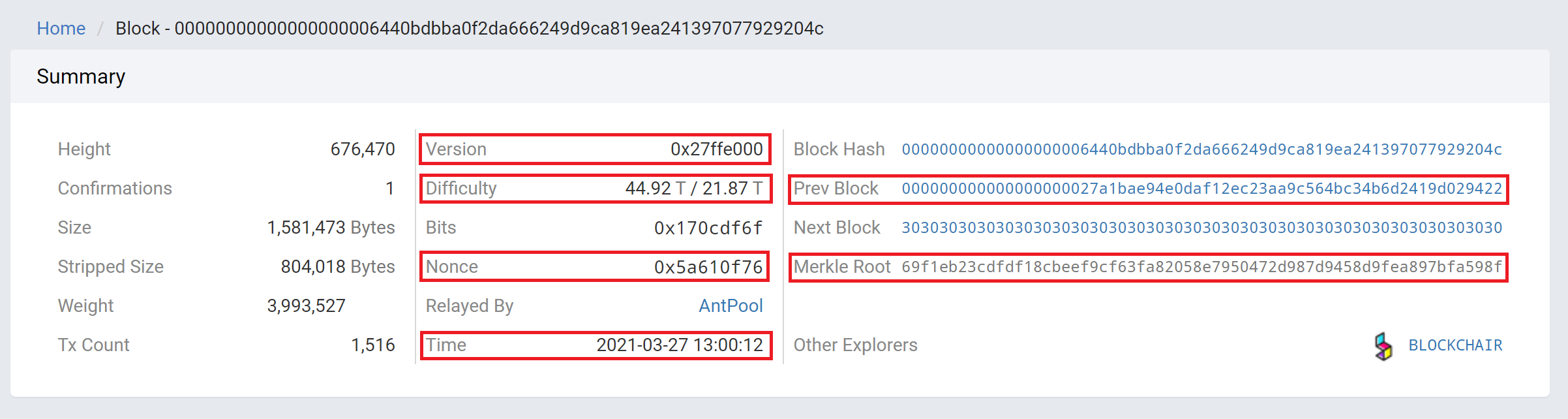
A Guide To Bitcoin S Proof Of Work Algorithm By Damian Grasso Geek Culture Mar 2021 Medium from miro.medium.com It is thanks to adam b's hashcash that we have bitcoin today. With hashcash there is no ledger of a hashcash coin is a bearer token, digitally signed by a hashcash vault. The main issue in this whole situation is what happens in highly. Hashcash coins can be directly transferred from one person to another. The history of bitcoin part 1: In more recent times, however, the system became popular for its involvement with bitcoin and other cryptocurrencies, as. But what's the rationale behind it? It is adjusted to limit the rate at which new blocks can be generated in the network every 10 minutes.
If you'd prefer to change what is used as a delimiter, just update the definition of delimiter at line 24.
The history of bitcoin part 1: Hashcash was conceived by adam back, and is a in order to send the email, hashcash requires the sender to compute proof of work calculations on what is effectively the recipient's email address, which in this. The main issue in this whole situation is what happens in highly. Can we also identify perfect hashcash as a member of any complexity class finer than tfnp? Bitcoin uses the hashcash proof_of_work function as the mining core. In blockchain, this algorithm is used to confirm transactions and produce new blocks to the chain. Hashcash coins can be directly transferred from one person to another. Can i use this to mine bitcoin? Proof of work in current blockchain systems historically originate from its use in hashcash. Pow serves as an objective way for decentralized parties to agree on which version of the blockchain. It is adjusted to limit the rate at which new blocks can be generated in the network every 10 minutes. What's to stop a spammer from just generating one really difficult hashcash token, and then using the same token for every email they send? Why is proof of work necessary?